Beyond Binary: A Smarter Way To Respond to Account Takeover Risk
21 Apr, 2026
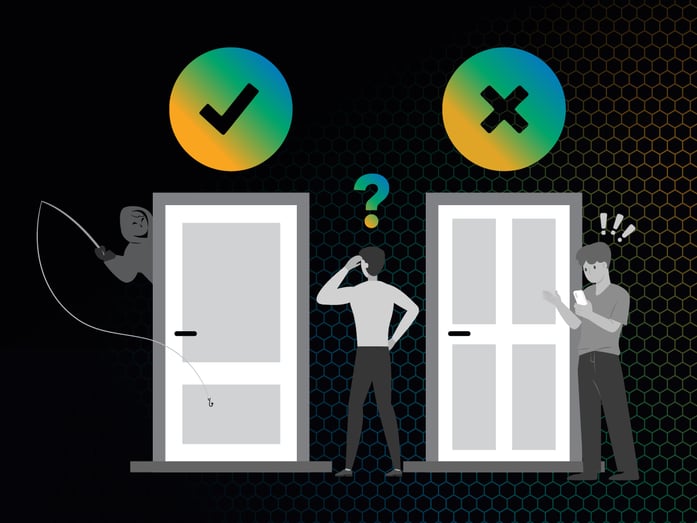
Fraud teams rarely struggle when a case is obvious. The harder moments are the ones in between. A login looks unusual. A profile change follows. Maybe there is odd session behavior, or a third-party signal that suggests something is wrong. Nothing on its own confirms account takeover, but taken together, the pattern does not feel right.
That is where many fraud defense approaches still run into a familiar problem: The response options are too binary. For many banks and credit unions, account takeover defense still comes down to a blunt choice: Let the activity continue or shut the user down completely. That made more sense when fraud patterns were simpler and user behavior was easier to predict. It makes less sense now.
Fraud decisions have become more sophisticated, but not always more flexible
Financial institutions have made real progress in fraud controls. Step-up authentication, multifactor authentication, and event-based decision making all add useful protection. Those tools help institutions respond to risky moments in real time.
But many of those decisions still happen one event at a time. An account holder fails one login attempt, passes the next challenge, and gets through. Later, that same user changes a password, updates settings, or behaves strangely in session. In many environments, each action is judged largely on its own. The broader pattern can get lost.
That leaves fraud teams asking the wrong question: Is this action fraudulent? The more useful question is, how confident am I in this user right now?
That distinction matters in account takeover scenarios, where the danger often builds gradually. Fraudsters may log in, wait, change settings, test behavior, and move carefully before attempting higher-risk transactions. They are not always making one obvious move. They are creating a pattern.
Why account takeover requires a more nuanced response now
This issue is more urgent because both fraud and normal account holder behavior have changed. Fraudsters have become more sophisticated, but legitimate users have also become harder to model. People use multiple devices. VPN usage is more common. Remote work has changed location patterns. Digital behavior is simply less predictable than it was a few years ago.
At the same time, money moves faster. When higher-risk transactions happen through faster payment rails, institutions may have less time to intervene and less chance of recovering funds once they are gone. That creates a real operational dilemma for fraud leaders and administrators. They may see enough risk to feel uncomfortable, but not enough certainty to justify a full shutdown.
That tension is especially important for commercial relationships, where institutions may be even less willing to create unnecessary friction for legitimate users trying to move money.
The better option is not less security. It is more proportional control.
A better response to possible account takeover is not to lower standards. It is to add flexibility. That means giving institutions the ability to temporarily limit what a user can do instead of forcing an immediate all-or-nothing decision.
Put simply: You let them in, but then you maintain control of what they can do.
In practice, that could mean restricting high-risk actions such as password changes, profile updates, or other sensitive settings. It could mean reducing transaction limits temporarily. It could also mean blocking access to specific high-risk transaction types, such as instant payments or domestic wires, while allowing lower-risk activity to continue.
That kind of response does two things at once. It reduces the institution’s exposure, and it avoids treating every uncertain case like a confirmed fraud event. For fraud teams, that is powerful because it creates room to respond proportionally to uncertainty.
Where a flexible response model can help most
This kind of approach is especially useful when signals are meaningful but not definitive.
Let’s say you have data from a third-party, like Plaid for example, [JY1] [KW2] [JY3] that suggests compromise. If an outside signal indicates that an account may have been linked or used in a way the customer did not authorize, that may warrant immediate caution, even if the institution does not yet have full in-session evidence.
Another example is suspicious but explainable session behavior: two active sessions at once, activity from different locations, or excessive navigation. Those patterns may indicate account takeover, but they may also reflect legitimate behavior. A fraud team may not want to ignore them, but it may not want to fully disable access either.
This kind of flexibility may also be useful for newer users, when institutions have limited historical context. During the first 30, 60, or 90 days, clear guardrails[JY4] [KW5] [KW6] [JY7] —for example, stricter initial caps on wires and external transfer amounts—may create less friction than repeated step-ups and transaction holds.
Flexibility can help the back office
It is easy to view this as a customer experience issue, but the operational impact may be just as important. When institutions fully block users, they often generate a wave of support calls. Account holders want to know why they cannot log in, what happened to their access, and how to fix it. That creates extra work for service teams and pulls attention away from investigation.
A more limited response can reduce that burden by allowing some access while the fraud team works the case. It also buys time.
That may be the most practical way to think about flexible fraud decision making in account takeover defense. It is not a permanent state. It is a temporary one that gives institutions space to investigate, validate, and decide what should happen next.
Over time, that process can become more refined. Teams can learn which signals truly justify a temporary restriction, which ones usually lead to confirmed fraud, and where full shutdown is still the right call.
Account takeover is not a binary problem
That is the larger point. Account takeover rarely unfolds in a clean, obvious line. It often develops through sequences, ambiguity, and incomplete information. Fraud teams need detection tools, of course. But they also need response models that reflect the reality of what they are seeing.
Sometimes the right answer is to allow the activity. Sometimes it is to block it. But increasingly, the strongest answer may be the one in between.
For banks and credit unions looking to strengthen account takeover defenses, this is a real opportunity. They can not only get better at spotting potential fraud, they can also get better at responding to uncertainty.