22 Jun, 2026

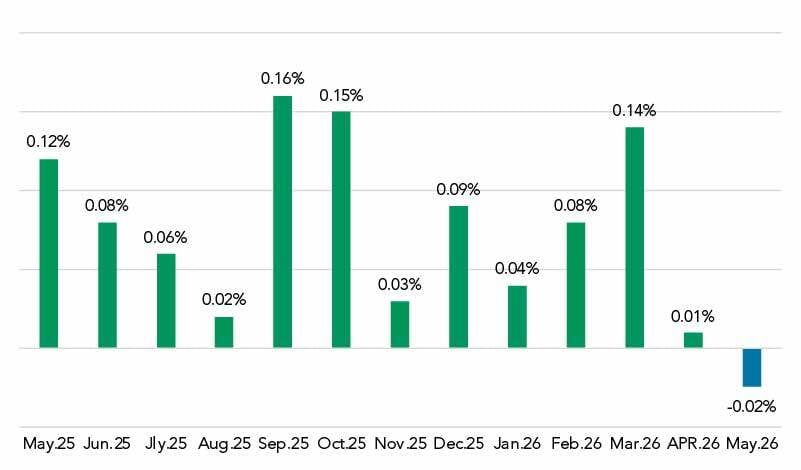
Our June analysis of the Q2 PrecisionLender commercial loan and deposit pricing database looks at May pricing activity, in which bankers generally held onto revenue spreads and were rewarded with NIM improvements from the funding side.
Pricing volume showed the first downtick in seven months, but it was also the second-highest posting since July 2025. We saw coupon increases in fixed-rate structures and moderate NIM gains across loan structures.
The funding curve continued to steepen in the mid-section, pushing all-in funding costs higher for fixed-rate loans. Meanwhile, deposit rates moved slightly and appeared to be more aligned with short-term market rate movement, which has moved little over the past month.
Read on for more details.
Data Notes
• When we discuss the cost of funds (COF) on loan pricing activity, we refer to the marginal, duration-matched funding cost employed in pricing, not the bank’s actual average (historical) cost of funds.
• We define Regional+ as institutions with $8B+ in assets, while Community are <$8B.
Volume: Strong again but down from April levels
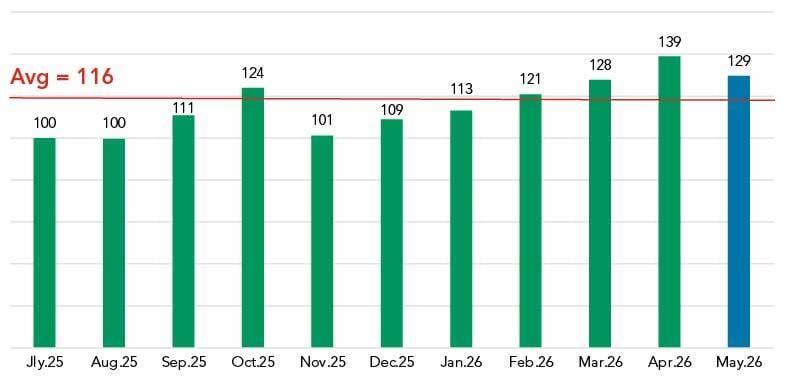
The drop in volume was concentrated in the Regional+ segment. Community volume was essentially flat month over month.
Gap increases between fixed-rate and SOFR coupons
May delivered a second consecutive month with the fixed-rate coupon above SOFR. The fixed-rate coupon rose 15 bps (5.83% to 5.98%), while the SOFR coupon dipped 2 bps (5.74% to 5.72%), moving the fixed-rate coupon to a ~25 bps premium to the floating rate coupon. The last time fixed-rate coupons were consistently higher than SOFR was Q3 2022.
Coupon Rate by Month
Rolling Trend
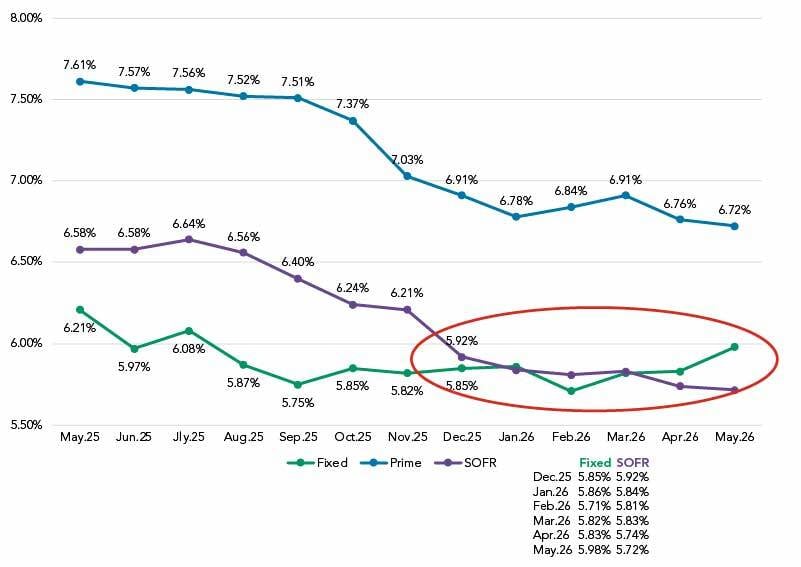
The question going forward is whether fixed-rate coupons continue to keep pace with marginal funding costs as the curve adds further slope (more on that later).
Modest NIM rebound after sharp April contraction
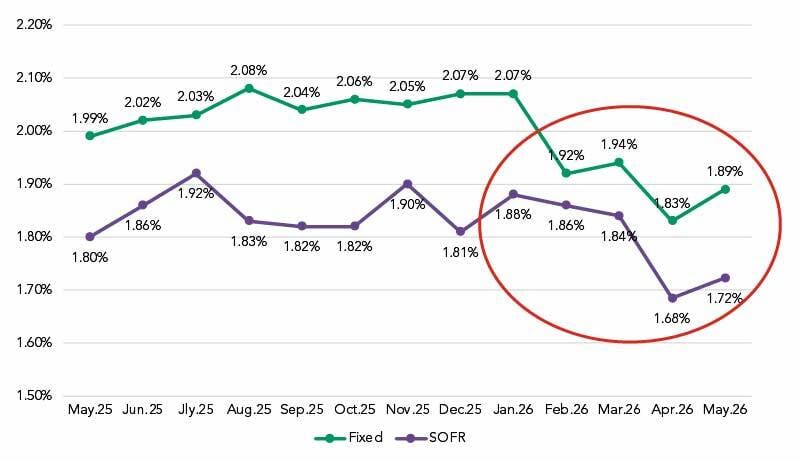
Net interest margin improved 6 bps (1.83% to 1.89%) in May on fixed structures, clawing back roughly half of April’s sharp decline. The 15-bps increase in coupon was largely offset by higher funding costs, with the net improvement reflecting a combination of yield and structural factors.
For SOFR structures, the gain posted 4 bps (1.68% to 1.72%) or 25% of April’s drop. The increase was driven primarily by a 6-bps drop in all-in floating-rate funding costs, with a 1-bp gain in spread to index partly offset by an ~3 bps drop in index value.
These were the first meaningful positive moves in several months, though NIM remains well below where it stood at the start of 2026.
NIM by Month
Rolling Trend
A note on interpretation: The COF figures cited below reflect the marginal, duration-matched wholesale cost of funds used in pricing, not the historical, average deposit-funded cost of funds on a bank’s balance sheet. Actual NIM at the institution level will vary based on each bank’s specific funding mix. Still, the trend in pricing-level NIM, typically lower than the bank level reported NIM, reflects the margin environment bankers are navigating in new and repriced deals.
Spreads: Still looking for signs of resilience
Spread performance in May was mixed, with narrow movement across all structures. SOFR spreads edged up 1 bp, fixed-rate spread over COF slipped 1 bp (and is down 19 bps since the end of 2025).
Weighted Average Spread to SOFR
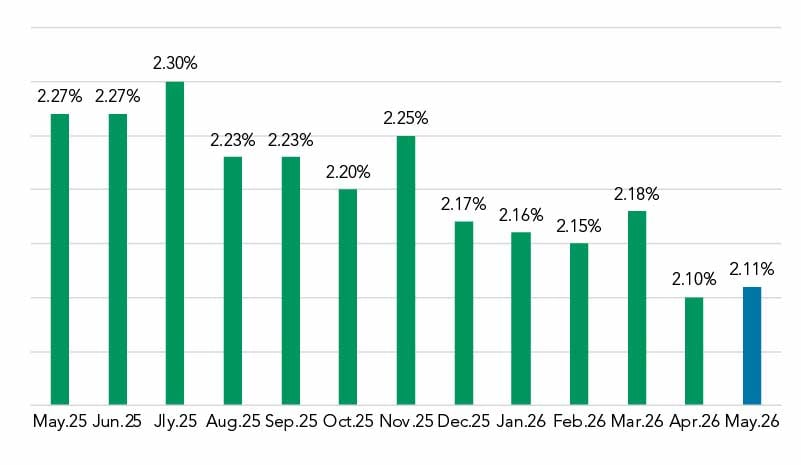
Prime drifted lower by 3 bps, moving Prime to 2 bps below the index. This is the first below-Prime spread posted, in aggregate, for these structures since we began tracking commercial pricing activity in March 2020.
Weighted Average Spread to Prime
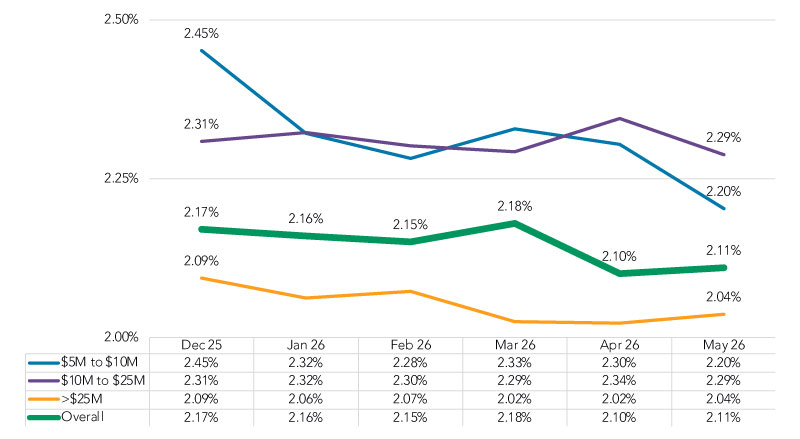
Looking at SOFR spreads by commitment size, the largest credits (>$25 million) have held spread more consistently than smaller credits in 2026. Deals >$25 million range have stayed within roughly a 5-bps band over the past six months and posted 2.04% for May 2026 activity. By contrast, credits in the $5-$10 million range are down 25 bps since December 2025 (2.45% to 2.20%).
Floating Rate Spreads to SOFR by Commitment
Funding curve steepening continues
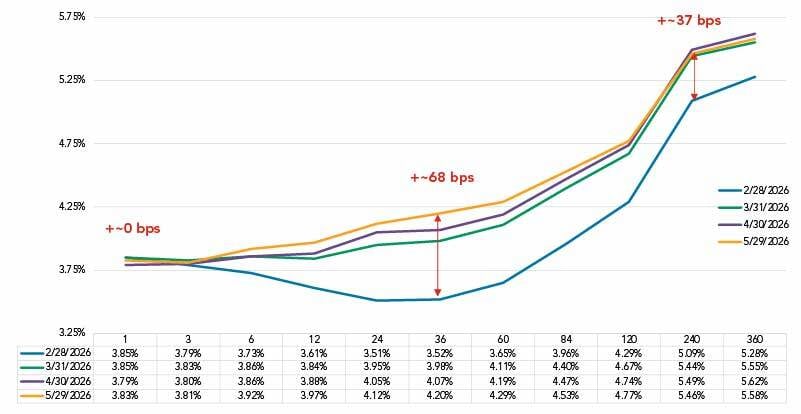
The PrecisionLender all-in marginal funding curve continued to add slope from the April 30 to May 29 snapshots. While the 1-month rate did move up 4 bps (3.79% to 3.83%) the mid-section all rose more (24 months up 7 bps, 36 months up 13 bps, and 60 months up 10 bps). The largest change since the Feb. 28 snapshot is in the mid section, +68 bps on the 36-month rate, for example. This shift has enabled the climb in fixed rate coupons.
PrecisionLender All-In Marginal Funding Curve
Fixed-rate funding costs move higher than floating
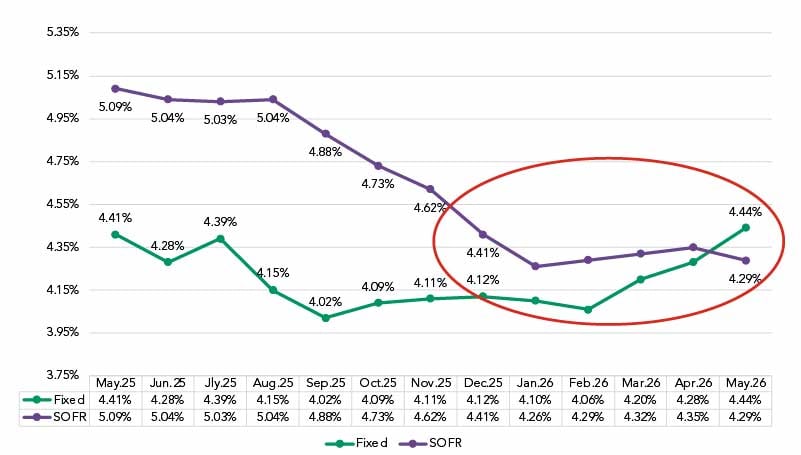
May brought a notable milestone in the all-in funding cost data. For the first time since Q4 2022, fixed-rate all-in COF exceeded floating-rate COF, and the month-over-month moves were in opposite directions: SOFR COF dropped 6 bps (4.35% to 4.29%) while fixed-rate COF moved higher by 16 bps (4.28% to 4.44%. Looking at the year-to-date picture, the divergence is considerable: SOFR COF is essentially flat for the year, while fixed-rate COF has increased 34 bps (4.10% in January to 4.44% in May).
All-In Cost of Funds by Month
Rolling Trend
Meanwhile, liquidity costs moved modestly lower on a month-over-month basis but remained within the narrow range they have occupied for much of 2026.
Deposit rates remain flat overall, but movement varies by segment
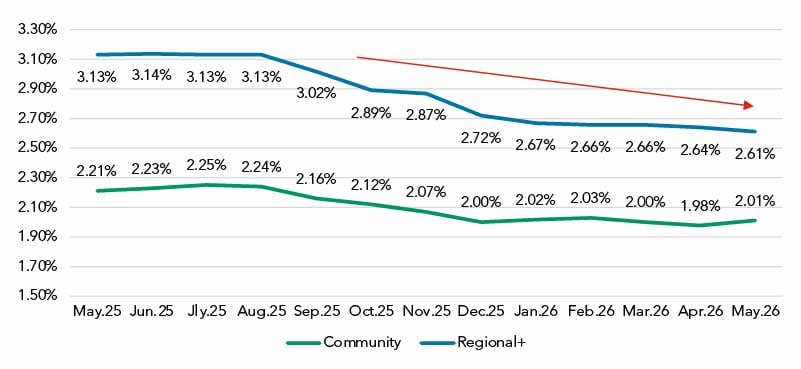
Deposit rates showed little movement in May, continuing the pattern of recent months. For interest-bearing non-time deposits, a useful proxy for management-set rate decisions, the Community segment edged slightly higher (1.98% to 2.01% while Regional+ moved modestly lower (2.64% to 2.61%). Since September 2025 though, there has been a notable divergence between the two segments when it comes to cumulative movement: Regional+ institutions have reduced deposit rates in those portfolios by 41 bps, while Community institutions have cut by 15 bps.
Interest Bearing Non-Time (MMDA, CWI, Savings) Rate Paid
Got questions?
Our banking consultants and data scientists are combing through Q2 PrecisionLender pricing data every day. If there is anything you’d like to know about what they’re seeing, please send your questions to insights@q2.com.