23 Jul, 2026
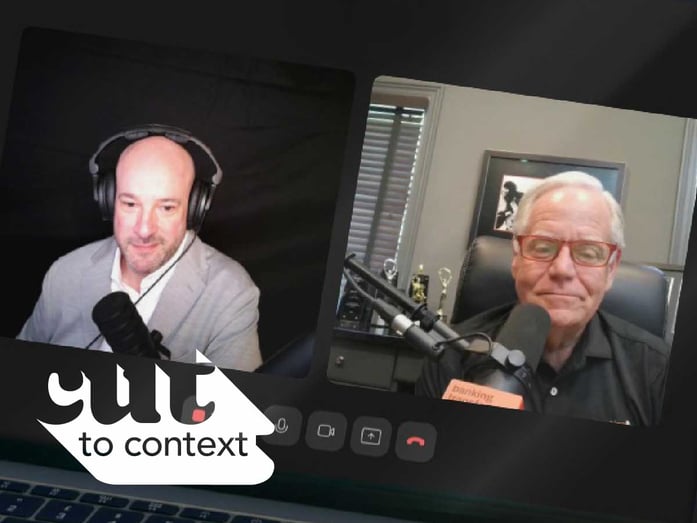
Your best customers have accounts everywhere, and your dashboard probably doesn't show it. Jim Marous, co-publisher of The Financial Brand and host of the Banking Transformed podcast, joins Adam Blue to examine silent attrition, the changing definition of primacy, and the specific things AI makes possible when a financial institution is finally willing to ask hard questions and act on what it learns.
Watch
Subscribe


.png?width=255&height=116&name=Spotify_white_bg%20(1).png)
Related Links
Transcript
Adam Blue
Neobanks and fintechs are capturing more and more deposit accounts. Some of them are coming from regional and community financial institutions. The data is what it is. But should you be afraid or should you perceive this as an opportunity?
Looking at their success and the advantages that you have as a smaller financial institution, you should be able to adopt some of their techniques and think about the way they capture and service customers, and build relationships and use them to your own advantage. Now let's talk to Jim Marous and see how you could make this a reality.
Hey everybody, welcome to this week's Cut to Context. I'm here with Jim Marous, a giant, really, in the kind of online talk about banking and technology and where we could go. So super excited to have you on today, Jim. Thank you for making some time.
Jim Marous
I'm glad to be on. Thank you very much.
Adam Blue
Great. So I watch so much of your content, I feel like you have begun to haunt my dreams. But something really stood out from a few weeks ago where you talked about this idea around silent attrition, which I thought was really, really interesting. And I've had similar thoughts working with customers and looking at data. I think the days when somebody opened an account at one FI and closed it at another, those are just gone. People leave a comet trail of half open accounts that they don't care about anymore behind them. So could you talk about that?
Jim Marous
Letting our families take care of the cleaning up after we're gone.
Adam Blue
Yeah. Yeah. When I'm gone, that may be the worst aspect of it for my kids is just trying to figure it all out. But maybe walk us through what you've seen in the industry and what that behavior looks like from the account holder and user perspective. And then obviously we'll get into—the point of this is not, hey, be afraid. The point is nestled in this crisis is an extraordinary opportunity. So today's discussion is about framing the problem and then digging into what can and should you think about doing about it. And so maybe kick us off, Jim.
Jim Marous
Yeah, and it's been used a lot, the silent attrition and different versions of that. But the story came to me when I was presenting to a room of 250, 300 bankers. They're all retail bankers or in the retail banking industry. And I asked, how many of you have closed your primary financial relationship in the last five years? Show your hands. Maybe there were three in the room. Now mind you, definitely a biased crowd in that. These are people that already have an account, probably at the institution they work at. So the thought of closing the account may have been less than what a normal audience would be. But then I followed that up with: How many of you have opened a new account in the last two years from a non-primary financial institution that may even be a fintech? And everyone raised their hand. I said, keep those hands up. Now everybody look around the room. These are your customers.
So while you may think that your relationship is stable, while your checking account may have been open for 25 years at an organization, it doesn't mean that's a relationship. And what I then tell people is if you want to see how bad this is or where the opportunity is, do a flow of funds report with your primary core provider. Have them show you where money goes on a monthly basis from your best customers. Just pick the top 10% and see where money flows at payday. It's going to Robinhood, it's going to SoFi. It's going to all different types of organizations at all different levels. It may even be payments to a credit card company.
It's interesting because I'm going to be publishing a video tomorrow on primacy. The whole idea of primacy has changed dramatically. I've been in banking now for half a century. I don't know if it sounds better to say 50 years or half a century. They're both very old. And the reality is we pretty much always said, if you had the checking account, you were the primary financial institution. And then it moved to if you had the checking account and direct deposit, you had the primary financial relationship. The reality is that doesn't work anymore.
Primacy is really defined by who a customer says is their bank if somebody asks them on the street, and it may not be a checking account. My son, his primary financial relationship is either with Chase on the credit card, the rewards card, or with Venmo, where he does all his payments between him and his friends, either with a card or not a card. And that's where his relationship really lies. And as of last week, it may be with his mortgage company, his first mortgage.
So while this is a major threat that every financial institution is facing, our ability to say we have a relationship, that word can even be taken out of context. Because it isn't really a relationship if it's one way, if I don't have any say in the world, and if there's not dialogue going on. I liken it to dating, but it's been a long time since I was in that world.
Adam Blue
I think the word dialogue is really relevant. Dialogue and relationship go hand in hand. If you're just broadcasting, at best your customer has a parasocial relationship with you, and in the context of banking, I don't even know what that would mean.
The other thing that's interesting is around the data underneath AI, which is a big part of how we make use of it. So since the rise of AI, there's a new class of technology that's really compelling. And I'm not going to get way into it because this is not that kind of discussion, but existing databases are not good at representing relationships between things outside of the traditional SQL-based third normal form.
So there's a notion of a new kind of database called a graph database that reflects the relationships between objects in a way that's much more natural and much more performant. And it's interesting to me when you say get the report from your core provider of where the deposit flows are going, that is literally a description of an idealized use case for a graph database of where people's money goes once it hits the FI. And so, like so many other conversations we have about taking a problem and thinking about how you apply AI, it starts with a deep understanding of the data and the ability to take a chance on representing the data in a different way or asking a different question to the data.
And so I think there's a clean takeaway here, which is before you formulate any strategies about how you're going to outcompete, or reachieve primacy or figure out what primacy means going forward, you've got to ask yourself this fundamental question: Do you actually know where the money is going? Do you have a sense of that and can you act on it?
Jim Marous
And by the way, are you a receiver or distributor? Your whole idea of what you're talking about, the database. It's not just where the points are, but which way the money is flowing within those points, and can you determine if there's flows outside and you're not even in the center? We always feel like our biggest relationships are the ones where we're the central point. We may be on the outside. We may not be the central point.
And I think the biggest opportunity is—to use your term—take a chance to have a conversation with a client or a member or a customer, to ask questions and then act on them. I get frustrated every day that while I have a business relationship and a personal relationship with two different financial institutions that are both in the top five in the country, neither spends any time telling me that they know me quite well. They're afraid to take a chance. And this is where we get into a real dynamic that creates friction. We're in an industry that is risk averse.
In fact, the very first thing I learned when I worked for a bank was you better balance at the end of the night at the teller window. You could get fired for not balancing, but not fired for not selling or offering services to customers. The challenge is we have to become a risk management industry. We've got to figure out what risks are worth taking in a world filled with data. If you're not willing to ask a question that you will take action on and be willing to be wrong by 20 to 25 degrees, the customer's going to accept that if your question is going to move to action that increases value in the relationship.
It is again no different than dating. If you're simply going through the questions on a date, it's felt really quickly. If you actually listen and follow up with another question that refers to the previous answer, the person knows you're actually listening and actually evolving the relationship because of that. We have the power of all this data and all this insight and the ability to process it better than ever, no matter how big your institution is. We have the ability to actually take action on behalf of the customer or at the customer's request that can build that relationship.
Even if you had it all right, you have no relationship unless you can provide value and if they don't look to you first for the answers that mean the most. I can't simply be a paycheck motel—I'll quote Ron Shevlin on that. I can't simply be a paycheck motel because I will be outplaced. PayPal is more of my financial institution than the traditional bank because PayPal knows where money goes both in and out specifically. I would say Amazon has a better relationship with me on a banking basis than my primary personal relationship. In fact, even Acorns knows more about me and the flow of funds than my primary personal relationship. We've got to figure that out, but we've got to be willing to work on behalf of the customer based on the insight we have and can achieve in order to truly build that relationship in the traditional give and take world.
Adam Blue
Yeah. One of the things I believe pretty deeply is that most dumb decisions people make probably arise from fairly rational conclusions from terrible assumptions. I have relationships at two or three of the largest banks in the U.S., and I have relationships at some very small FIs, some of which are customers, and then I have fintech relationships as well. What almost none of them have ever done is said: We notice that 80% of your paycheck goes to this other place every time it comes in. They don't ask. They don't say, why do you send it over here? What is it that you get from this other institution? And I'd probably answer that question if I thought I would get better service out of it.
Jim Marous
And it's not just that we're in the industry. If you thought they were going to do something with that. Today you're assuming they are going to do something with that, because if the pizza shop down the street that you call to order pizza says, do you want to order the same thing you did last time, you figure that when a financial institution is going to ask you a question, they're actually going to do something constructive that's going to be a value growth on both sides. We know they're going to get value out of it, but I'm hoping that I will. We drop the ball on the second half of the engagement every time.
Adam Blue
Yeah. So let's pick at that scab a little bit. What do you think it is inside a financial institution? Is it culture? Is it operations? Is it incentives? What is it that keeps someone from saying, I'm going to build a mechanism in digital banking to ask people about the flows out of the bank? Why are we not doing it?
Jim Marous
That's a great question, especially from you, because you're a technology person. The technology is there. The technology can be bought from multiple organizations and we can make it work. I think the back office would get excited about that because there are all kinds of opportunities that come out of that. The asking of questions will not displace people. In fact, I'd hazard a guess it would actually add people. So you're not going to get any friction internally.
Adam Blue
I'll put this out there for any Q2 customer that happens to watch this podcast. If you think that's an interesting question to ask your customers, just send me an email, adam.blue@Q2.com, and I will find somebody to build it for you gratis and we will try it. Because I've been talking to banks and credit unions about this for a couple years now, and I just cannot get anybody over the hump to actually try this idea of just asking and then taking the data and using the tooling that we have to answer those questions. I think it would be fascinating to see what we got.
Jim Marous
There are two reasons why you don't get people raising their hands. Number one, leadership. The biggest differentiator between digital maturity between company A and B is at the very top of the organization. And it's the smallest and the biggest financial institutions that get it. Some of the smallest are the best because they have that scrappiness—that small business mentality to say, I'm not afraid to scrape my knees. When you start moving up the asset numbers and you move above $10 billion, you have old school leadership that played golf together on Monday nights when they were management trainees, that have been together forever and have not had a bad year. So in other words, it's not broken.
Leadership has to be willing to embrace change, take risks—that's the biggest one—and then disrupt themselves. They've got to get out of their comfort zone. And the problem is in banking, we've hired people under this theory that we don't want to rock the boat. There's never been an easier time in my career in banking to be wrong and not be ridiculed for it.
We can get in the recommendation business that says, by the way, you said you have a loan with ABC organization. I can lower your rate for you. Or I would not even mind telling the customer, by the way, we can't beat that rate, but here's an institution that might be able to. All of a sudden, we've given a recommendation, we've done two things at once. Number one, we responded, which is going to surprise the customer, by the way. Number two, we may offer something that's better for them and not better for us, but we haven't lost anything because it wasn't our loan we were talking about in many cases.
The customer is probably more willing to accept slightly wrong answers if you at least listened and did something about it. What they get frustrated with—financial analysts used to do this—you get a financial planner, they ask you 500 pages of information, and then you mentally say, I'm not the biggest fish in the pond. They've taken all that information and put it in their files. I can still remember them doing it almost while you're still there, putting their credentials. They just used it to get a check mark from their boss saying, I collected this information.
But now it can be compiled. You know based on payments and what's on the credit bureau what the term of my loan was, what I'm paying monthly, so you can back into what rate they paid. You don't have to know the rate. It's very clear: We're birds of a feather, both frustrated by the scenario that you can build what the client needs, what the financial institution needs. All they need to do is get out of their own way.
It's very much like the new account opening process. Moving from 14 minutes down to three to five minutes. It's easily done in our industry right now. There are a lot of vendors. The problem is, even when the customer signs up for it, one of the first conversations they have is, by the way, I want to use your process, but I'm still going to require the driver's license. And you know, it goes up to nine minutes at that moment. You'll never get to the promised land.
And by the way, that driver's license is a tradition. It's not the best tool. You have digital information in your files at Q2. You have digital information that is better than what that driver's license is to identify who this person is. And if they're a current customer and you're asking the same number of questions, you're upsetting the customer.
Adam Blue
I totally agree. So that brings us to another topic that I know you're passionate about, and that's this notion of attention. People have limited attention. The modern digital economy basically trades on attention. Your attention is in some ways the product. It's the commodity that everybody trades.
And so to the extent that people are going to open the mobile app and look at their balance, open the mobile app and make payments, open the mobile app and do the things they need to do. There's a fleeting moment in that digital experience where you can engage with the customer simply, and then you can bring that data back to the institution so that the next time you get the privilege of talking to that customer in person, you have the context of those digital interactions.
Can you think of a single financial institution that is taking what they learn in digital effectively and bringing it to the in-person or call center or branch interactions? I don't know if I can come up with an example, but maybe you've got one.
Jim Marous
That's interesting because I know it the other way. I know how some organizations are doing it digitally, but Erica from Bank of America. They've had what is it, 3 billion interactions with customers over the last seven to ten years. And the reality is they have built what could be the best agent ever for these customers, they've stored those insights, and they've gotten more and more sophisticated on the questions and what they're doing. So they're proving the point that we can probably work on your behalf, or at least you can have your agent work with us to get to the point you want to.
How about if we gave them an answer before they asked for it? My newest insight video that's coming out tomorrow talks about primacy, and I talk about the fact that Huntington offers the majority of their customers that meet certain balance and duration times with their financial institution a pre-approved loan amount at the top of their mobile screen that says, by the way, push this button, you can access somewhere between 100 and 700 dollars. This does not need a credit bureau. This does not need pre-approval. What they're doing is saying, you know what, we know enough about you. You've been around for a while, you're handling your account well. We want to give you this access.
They're actually giving you an answer ahead of time. How about a search bar in the mobile app that says, ask us any question? There is not a question you can ask your financial institution that you couldn't give the beginning of an answer to, and then at the end of that answer, have a button that says, connect me with a human. You may end up going the backwards way of what you thought you were going to do with your call center or the human in a branch, but isn't that a payoff? If you had a question that was asked and you can answer it, that's better than ... I'm not talking about the balance or where can I find my account number, or where's an ATM. It's that deeper question. Connect me with the right person. We have the tools to connect me with a person within the financial institution that knows how to work with small business owners like me.
I honestly cannot come up with an organization that has an open-ended value proposition that brings people back into the branch or to the call center for deeper engagement. That is a huge missing link. And I think it's Regions Bank that has now built a beginning of the mobile app that will answer some of these simple questions within the app. That's a good first step. But man, we're leaving so much money on the table. There's so much opportunity here. And I think we're afraid, again, of making that mistake.
Anyone who's played around with AI knows it's the questions that drive the answers. In the beginning they said, my god, this thing doesn't give the right answer. Well, maybe you didn't ask the right question. That's what we have to do. We have to open that door.
Adam Blue
Yeah. I think this notion of asking questions and being curious about your customer is really powerful because it also privileges the customer in the relationship in a way that's meaningful. The unsolicited offer of help, the unsolicited offer of a small line of credit, the unsolicited offer of an ODP privilege—whatever it is—the perception is, you thought about me when I wasn't calling you and asking you for something. And that just feels good. It just feels meaningful in the relationship to do that.
Jim Marous
Again, like that dating relationship. You send flowers for no apparent reason. I gave an example in a recent video where Delta ... I was in a nice seat on Delta and the flight attendant came to me before they took off with a little card. It was a postcard that said, Jim, thank you very much for being a platinum member and also thank you for flying with us on the way to Cleveland. We're glad to serve you today. Signed by the flight attendants in the front.
I've given that example out 20 times since it happened. It was a very simple activity. But that surprise and delight is different than a check mark thing, which is like my business banker calling me on a quarterly basis going, hey Jim, just checking in to see how you're doing.
No. You have access to data, you have access to insight. You have something you could provide me beyond simply, hey, I'm getting this off my check mark sheet. If they said instead, by the way, Jim, I'd like to talk to you about some idea we came up with for companies like yours that do podcasts—come up with anything. Spend two minutes in front of an AI tool before you call me. You could get my attention. As customers, we get more frustrated by the dumb questions than we get with the wrong answer to a smart question.
Adam Blue
Yeah. I agree. I think that's an interesting way to frame it.
All right. So we've talked about silent attrition a little bit. You gave us a little preview of a podcast you've got coming up on the notion of primacy, which I'm looking forward to. And we've talked a little bit about being curious and moving away from risk aversion into risk management. Just a fantastic run of topics today.
On the way out, I would ask—and I know this is tough—but if there was one thing that a credit union or bank leader, or someone in the middle of the org, or even someone at the individual contributor level could do tomorrow morning when they get up and start their day, what's the one thing you would recommend that they do right now that they're probably not doing today?
Jim Marous
I think the most valuable thing an organization can do as a wake-up call is have your core provider give you a flow of funds report as to where money is going for only the top five percent of your customers or members and find out where that money is going. Because I think you'll be very surprised. I'll be very surprised if it's not a huge wake-up call that goes, my gosh, we thought these were our best customers. No, they're simply the most active. They have more relationships than we thought.
And it is very clear, if people dig into it—which takes a little data work but is not impossible—of all our top 10% of customers, 30% of them use Robinhood every month, or 28% actually have a checking account with Chime. And all of a sudden they'll realize: I guess I kind of put Chime into a bucket that they no longer belong in, which is they're only serving the lower income customer. Well, guess what? That ship has sailed. People are more comfortable.
And what's good about the flow of funds, if you could take action on that, you're getting something back that we're losing slowly, and that's trust. Do I trust you to be in my interest as opposed to yours? And will you show me empathy? Because we're all getting smarter, and the whole position of being a fast follower doesn't play anymore. Because if you're a follower, you're probably not fast enough.
Resilience is no longer based on risk and fraud. Resilience right now is going to be how digitally adept are you to serve me on my behalf? And I think that's going to be the way to really step out in front of all the organizations down the street or across the street who are much bigger than you, but you can do it in a way that no one else can.
Adam Blue
Yeah, that's great. I love your use of resilience there. I think that's really powerful. Well, thanks for being on today, Jim. This was really great.
One of the things we do at the end of Cut to Context is we pull in a reference point from current popular culture that people can go enjoy. And I'm reminded today, especially from your conversation about resilience, of a book and a movie that I think are fantastic. It's "The Martian." You can find the film all over the place. The book is by a guy named Andy Weir. And it is such a great parable for finding yourself in a situation and then just making a level-headed plan, executing that plan, and adapting every time you find out some part of your plan didn't work. It's an extraordinary story that highlights what real resilience is. It's not hanging off a cliff or being trapped on Mars. It's just a willingness to adapt to new information as it becomes available, get your head out of the sand, and make good solid choices. So check out "The Martian" if you haven't already, or rewatch it. It's a fantastic film.
Thanks again, Jim Marous, for being on today. Really appreciate you.